
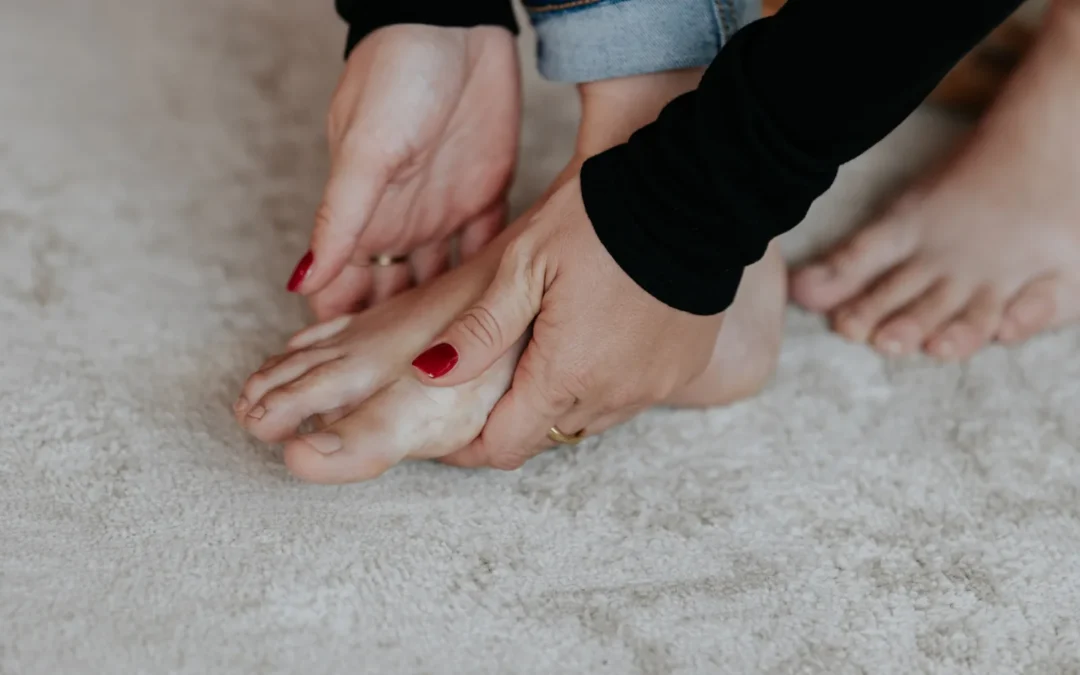
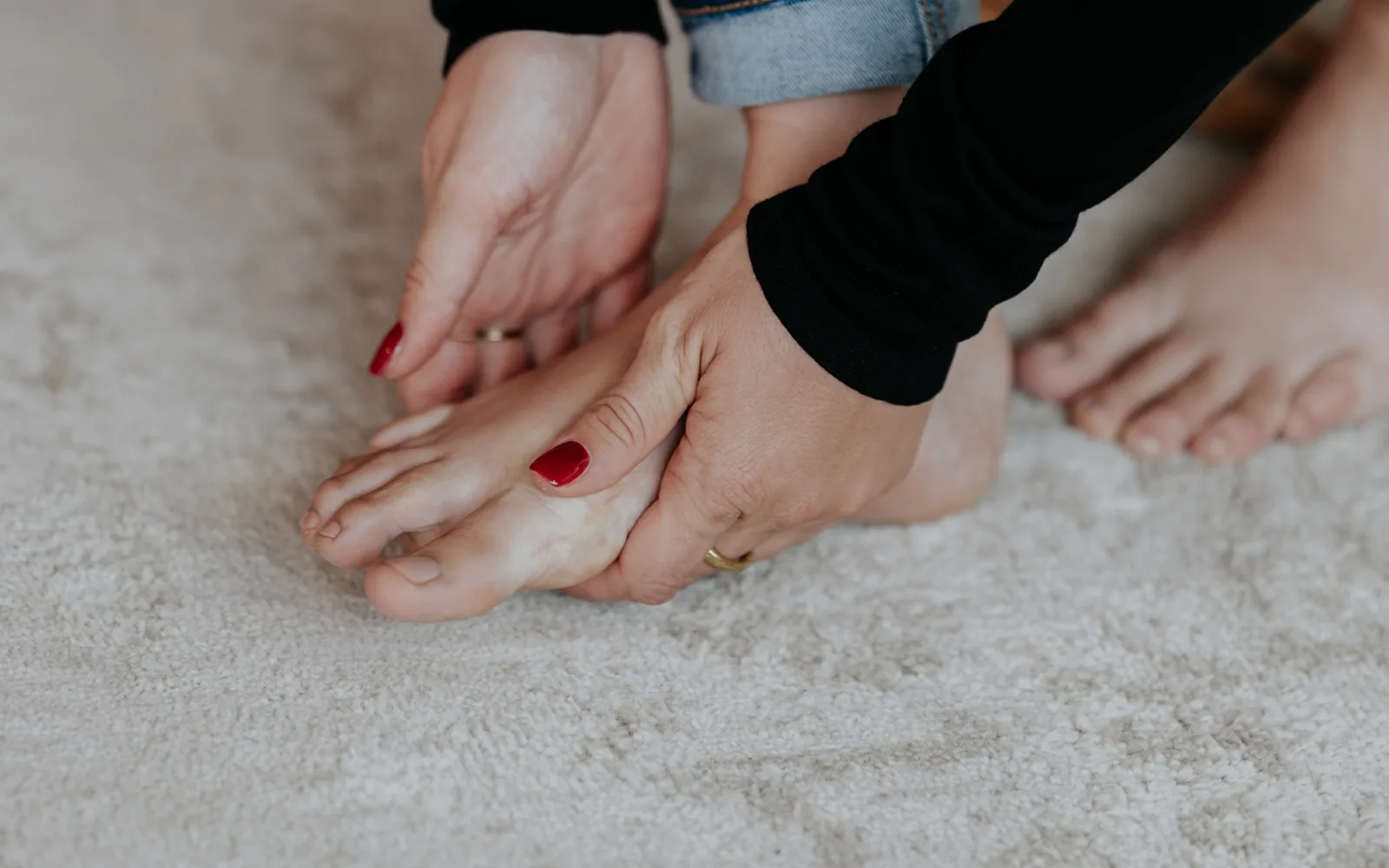
Hallux rigidus is arthritis of the big toe joint (first metatarsophalangeal joint). The cartilage wears away, bone spurs form at the edge of the joint, and the big toe becomes harder to lift. What helps depends on the stage: early on a stiff sole, insoles and physiotherapy, in grades I and II joint-preserving surgery, in grades III and IV a fusion. It is not a bunion (hallux valgus), where the toe is crooked but stays mobile.
Contents
- What is hallux rigidus?
- How do you tell if you have hallux rigidus?
- What causes hallux rigidus?
- What are the stages of hallux rigidus?
- Can hallux rigidus go away on its own?
- What helps hallux rigidus without surgery?
- When is hallux rigidus surgery needed?
- Which surgery helps hallux rigidus?
- What happens if you do not have surgery for hallux rigidus?
- How does the toe stay mobile after hallux rigidus surgery?
- Conclusion
- Frequently asked questions about hallux rigidus
- Sources
What is hallux rigidus?
The term comes from Latin and means stiff big toe. It refers to wear and tear in the joint at the base of the big toe, where the toe joins the foot. This joint bends every time you push off when walking, and it is exactly this push-off that becomes painful and restricted with arthritis.
Hallux rigidus is the most common form of arthritis in the foot. About 2.5% of people over 50 are affected, and most develop it between the ages of 40 and 50. Unlike hallux valgus, where 9 in 10 of those who have surgery are women, many men are affected here too: for every two women there is roughly one man. The early stage, in which the joint is already becoming stiffer, is also called hallux limitus.
What is the difference between hallux rigidus and hallux valgus (bunion)?
Both affect the big toe, and both can occur in the same people, but they are two different conditions. For every seven cases of bunion there is roughly one case of big toe arthritis.
| Hallux rigidus | Hallux valgus (bunion) | |
|---|---|---|
| Main problem | joint becomes stiff and painful | toe points crookedly towards the outer toes |
| Where it presses | bone spur on top of the foot | bunion on the inner edge of the foot |
| Deformity | usually none | yes, the toe drifts out of line |
| Mobility | limited, above all upwards | usually preserved |
| Cause | cartilage wear (arthritis) | splayed forefoot, tendon pull, heredity |
How do you tell if you have hallux rigidus?
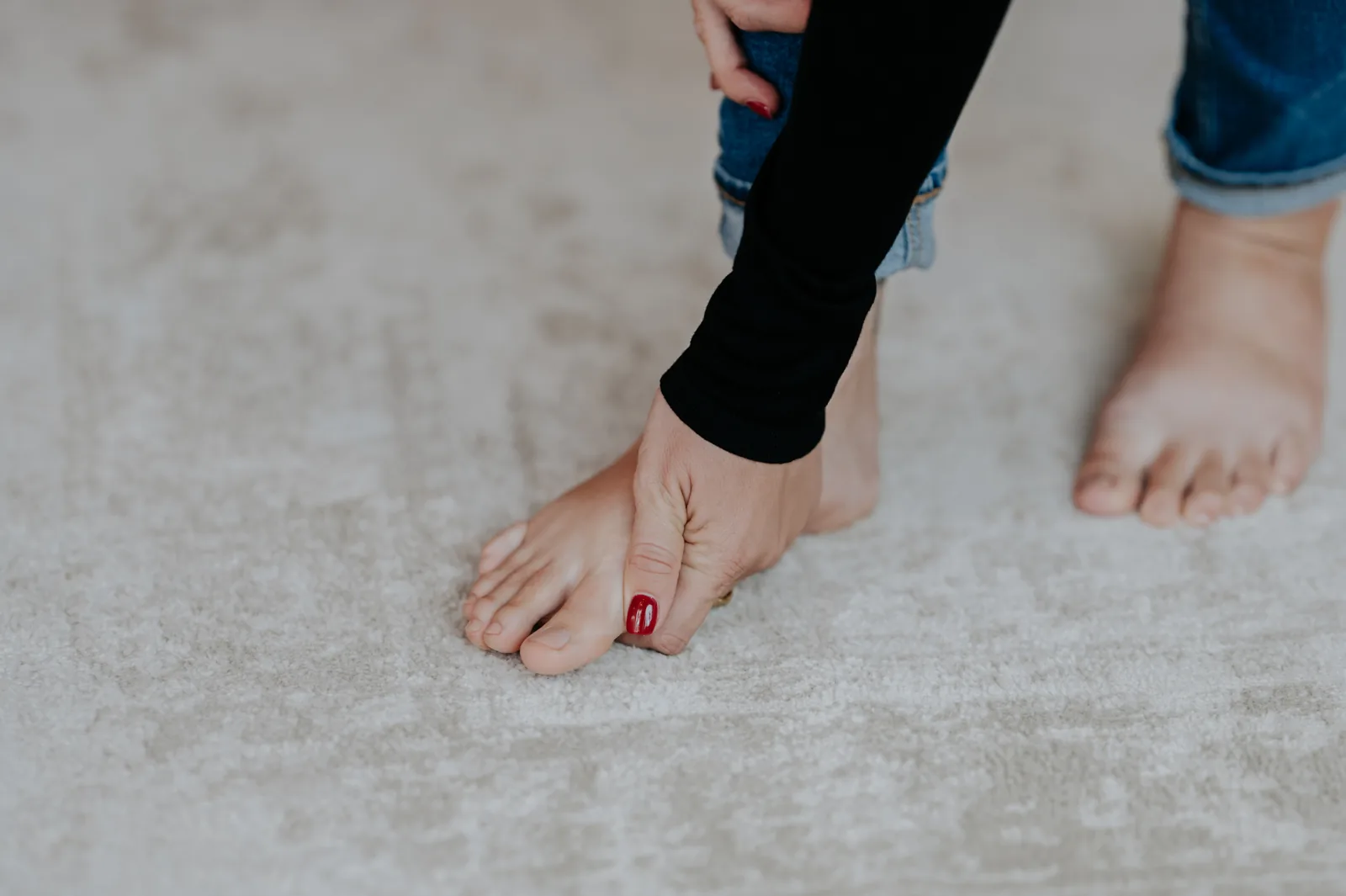
A typical symptom is a sharp pain when you push off: climbing stairs, walking fast, going up on your tiptoes. The big toe joint is often swollen and red. If you press on top of the joint with a finger, you feel a hard lump, the bone spur. And if you try to pull the big toe upwards with your hand, you notice that it does not go far, and at the end of the movement it hurts.
Two signs stand out in everyday life. First, shoes: the lump presses against the upper, and firm shoes become uncomfortable. Second, the way you walk: many people unconsciously roll over the outer edge of the foot so that they do not have to push off through the joint. This takes pressure off the toe but loads the neighbouring toes and the midfoot, which can then hurt as well. If you notice these signs, have the joint checked by an orthopaedic specialist, because treatment is simplest at an early stage.
What causes hallux rigidus?
Often there is no single cause. Known triggers are:
- Predisposition: arthritis of the big toe joint runs in families.
- Injuries: a knock, stubbing the toe on the edge of a table, a fracture, or many small injuries over years, for example in sport. If only one foot is affected, this can point to an injury.
- Malalignment: a raised first metatarsal bone (metatarsus primus elevatus) or an existing hallux valgus.
- Metabolic and joint diseases: gout, diabetes, rheumatoid arthritis.
- Tight, hard shoes and excess weight, which put extra strain on the joint over years.
What to take from this: a stiff big toe is not a sign that you have done something wrong. What you can influence above all is how much further strain the joint takes and how early treatment begins.
What are the stages of hallux rigidus?
Doctors divide the condition into stages, called grades, according to mobility and the X-ray. The widely used classification goes back to the American foot surgeons Coughlin and Shurnas. In simplified form it looks like this:
| Grade | Mobility | X-ray |
|---|---|---|
| I | pain only at the end of the movement | arthritis not yet visible (hallux limitus) |
| II | lifting and bending limited | joint space narrowed, bone spurs visible |
| III | markedly limited, grinding in the joint | joint space severely narrowed, cysts, large spurs |
| IV | 10 degrees of movement or less | joint space almost gone, loose bodies in the joint |
The grade is the most important factor for every further decision. It determines whether non-surgical measures still work and which operation is an option at all. The basis is a weight-bearing X-ray of the foot (taken standing) from several angles. An MRI scan is only needed if joint-preserving surgery is planned and the condition of the cartilage has to be known precisely.
Can hallux rigidus go away on its own?
No. Worn joint cartilage does not grow back, and bone spurs do not disappear by themselves. That is the honest answer, and it is still no reason to worry: the arthritis can be slowed down, and the pain can often be well controlled for years. Specialist clinics report that many people manage surprisingly long without surgery if they consistently take the strain off the joint and do not place high sporting demands on it. The earlier treatment begins, the better the chances of slowing the course.
What helps hallux rigidus without surgery?
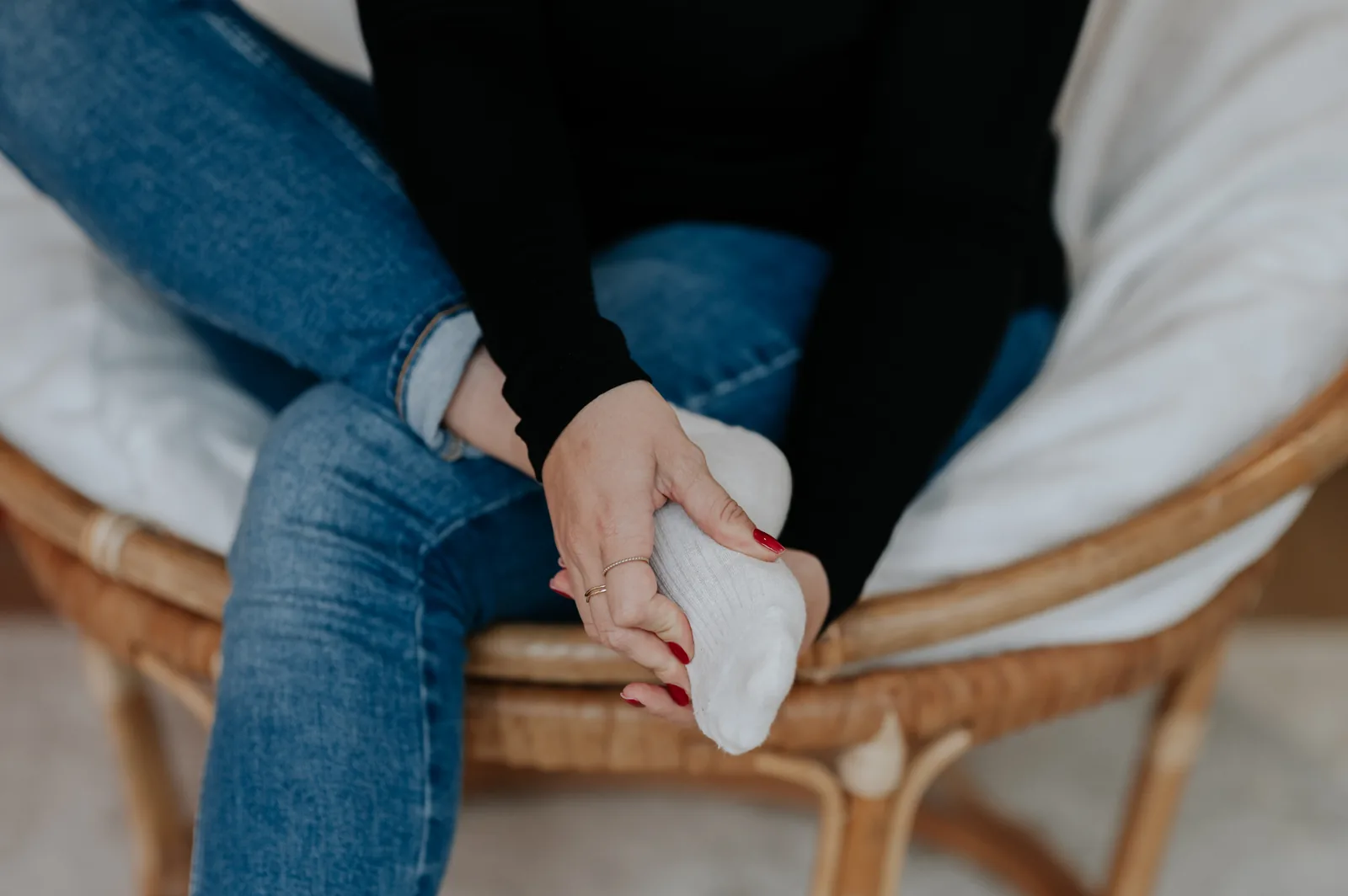
The aim of all non-surgical treatment is the same: to reduce the load on the joint, the pressure on the bone spurs and the inflammation. How well each measure helps depends on the grade.
| Measure | When it helps | Where its limit lies |
|---|---|---|
| Stiff sole, rocker sole, insole with a rigid extension under the big toe | grades I to III, daily, long term | eases the pain when pushing off, does not change the joint |
| Physiotherapy with traction and mobilisation | grades I and II, as long as the joint still has some play | only of limited use once large spurs have formed |
| Anti-inflammatory painkillers (ibuprofen, diclofenac) | during painful phases, short term | not long term because of the stomach and kidneys |
| Steroid (cortisone) injection into the joint | grade II: often several months of relief | in grade III about half as effective, not a long-term treatment |
| Hyaluronic acid or platelet-rich plasma (PRP) | while the cartilage is still well preserved | the effect decreases as the arthritis advances |
The foundation is the shoe. A stiff sole or a rocker sole shifts the push-off from the joint to the shoe, so the joint hardly has to bend when you walk. Add to this an orthotic insole with a Morton’s extension, a rigid plate that extends under the big toe. The two belong together: an insole without a rocker sole, or a rocker sole without an insole, does much less. Your orthopaedic specialist or podiatrist advises on this, and an orthotist makes the insole and adapts the shoes.
Which insoles and shoes help with hallux rigidus?
Good shoes have a wide, soft forefoot so that nothing presses on the bone spur, and a firm sole rounded at the front that takes over the push-off. Many walking and running shoes already meet these requirements. For everyday shoes, an orthotist can fit a rocker sole underneath. How stiff it needs to be depends on the grade: in the early stage a moderately firm sole is often enough, from grade II onwards a much stiffer sole is needed.
Which exercises are good for the big toe joint?
Exercises should achieve two things: maintain the remaining mobility and strengthen the muscles that guide the foot. Physiotherapists work with traction (gentle pulling on the toe), mobilisation of the sesamoid bones under the ball of the foot, strengthening of the long flexor of the big toe and stretching of the sole of the foot. A simple home exercise is isometric tightening of the muscles on the outer side of the lower leg (peroneal muscles), which stabilise the foot: hold for 7 to 10 seconds, 5 to 7 repetitions. One rule applies to all exercises: move only within the pain-free range, and never push against the bone spur. Which exercises are suitable, how often to do them and what to avoid is covered in the guide to hallux rigidus exercises.
Is walking barefoot good for hallux rigidus?
Generally not, at least not over longer distances or on hard floors. Walking barefoot makes the big toe joint bend fully at push-off, and it is exactly this bending that hurts with arthritis. Specialist clinics therefore recommend shoes with a stable sole that prevent excessive movement in the joint. Some people find soft soles and a few steps barefoot on carpet or grass pleasant. There is nothing against that as long as it does not hurt. From grade II onwards, the stiff sole is the standard.
When is hallux rigidus surgery needed?
There is no measurement that means you must have surgery. What matters is how much the condition affects you: when the pain dominates daily life despite insoles and shoes, when sport or work place heavy demands on the joint, or when the joint has already reached grade III or IV.
One point matters here because it is often overlooked: joint-preserving surgery has a window of time. It works in grades I and II and in selected cases of grade III, as long as more than half of the cartilage on the metatarsal head is preserved. If you wait a long time, a fusion is often the only option left. So if you notice that the non-surgical measures are becoming less effective, do not put off seeing a foot and ankle surgeon.
Which surgery helps hallux rigidus?
Three procedures cover most cases. Which one fits depends on the grade, your age, the demands you place on the joint and whether you want to keep its movement.
| Procedure | For which grade | What happens | What studies show |
|---|---|---|---|
| Cheilectomy (joint-preserving, joint debridement) | I and II, selected III | bone spurs and the upper third of the joint surface are removed, the cartilage remains, the joint stays mobile | 97% good or very good results after a mean of 9.6 years in 110 patients (Coughlin and Shurnas 2003); after 8 years 78% (grade I) and 74% (grade II) pain-free, no revision surgery (Waizy 2010) |
| Fusion (arthrodesis, big toe fusion) | III and IV | the joint surfaces are removed, the two bones are joined with screws or plates, fused at an upward angle of 15 to 40 degrees | reliably pain-free, full sport possible after healing, high heels no longer possible |
| Joint replacement (partial or total big toe joint replacement) | III and IV, if mobility is wanted | the joint surface is replaced by an implant | complication rate 26.3% versus 23.1% for fusion, revision surgery 11% versus 3.9% (Stevens et al. 2017); more than 35% of total replacements loosened after two years, partial replacements hold up better |
For early stages, cheilectomy is the standard route, because it preserves the joint and keeps all other options open for later. Its result lasts in the medium term, while the arthritis itself progresses slowly. How the operation works and what aftercare looks like is described in the guide to cheilectomy.
What happens if you do not have surgery for hallux rigidus?
Then the arthritis follows its own course, which progresses at a different speed in every person. The joint space narrows, the spurs grow, and mobility decreases. For many people this is quite bearable for years, because a stiff sole and insoles ease the pain when walking. Not having surgery is therefore a legitimate decision as long as daily life works.
Two things are worth keeping an eye on. First, walking on the outer edge of the foot to spare the toe, which in the long run strains the midfoot, knee and hip; physiotherapy helps to avoid it. Second, the window for joint-preserving surgery, which closes as the arthritis progresses. A yearly check-up with your orthopaedic specialist shows where the joint stands.
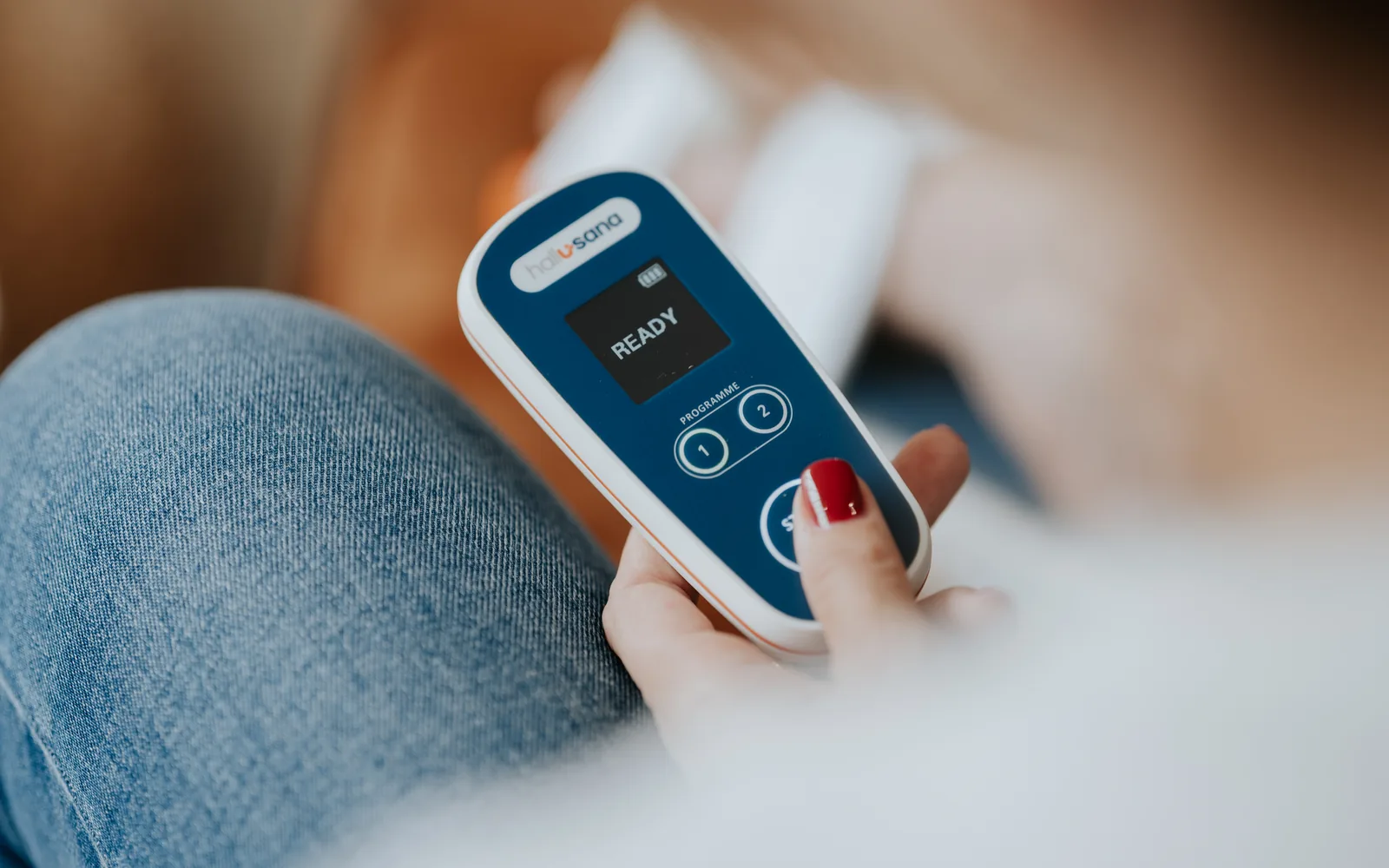
How does the toe stay mobile after hallux rigidus surgery?
After joint-preserving surgery, aftercare decides how much mobility remains in the end. The reason lies in the joint itself: after an operation, the joint capsule tends to stick together. Even one week of immobilisation shortens the joint lining and leads to adhesions (Akeson et al. 1987). That is why the joint should be moved early and in a controlled way.
Clinics’ aftercare plans differ in detail, and the ranges look like this: full weight-bearing usually straight away, a post-op shoe with a stiff sole for up to 6 weeks, stitches out after 12 to 14 days, home exercises from the second week, about 10 minutes twice a day for 6 to 8 weeks, physiotherapy from the start. It can take 3 to 6 months until everyday life is completely normal again. Which plan applies is decided by your surgeon.
There is a study on passive motion of the big toe joint, carried out after hallux valgus surgery: 39 patients after a chevron (Austin) correction were divided into two groups, and 21 of them used a motorised continuous passive motion (CPM) device for eight hours a day over 24 days from the day of surgery, in addition to physiotherapy. Their joint was more mobile at every follow-up visit, and they returned to normal shoes and stopped taking painkillers sooner (Connor et al. 1995). The study used a different device from the one described below. The studies are summarised on the studies page. This does not apply after a fusion: there the joint is meant to become solid, and a CPM device is not intended for it.
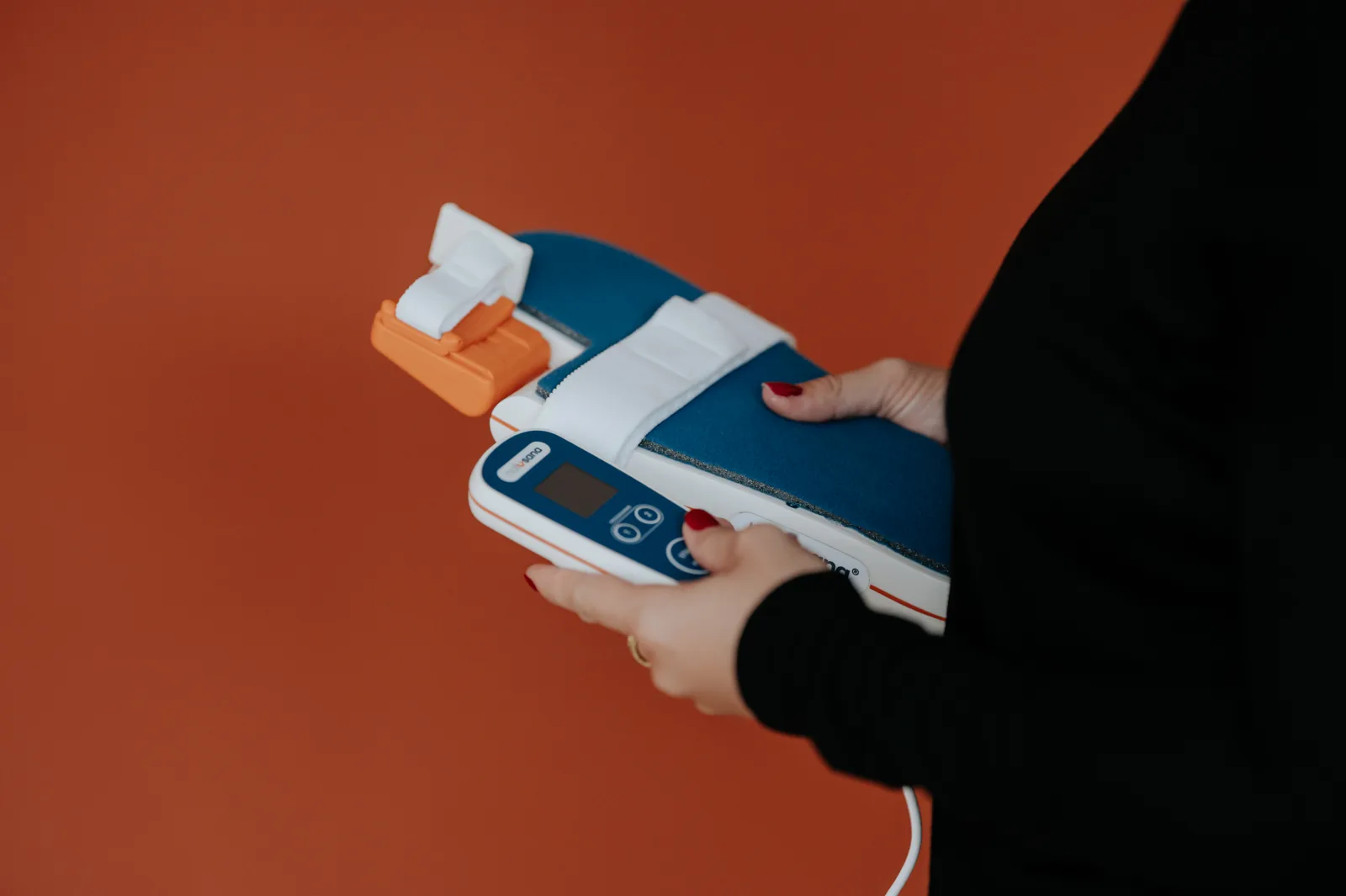
Passive motion at home after surgery
The Hall-U-Sana® toe CPM device moves the big toe joint with a motor and without any effort on your part: two fixed programmes, the first directly after surgery with 20 degrees up and 10 degrees down, the second for the later phase with 40 and 20 degrees, each for 25 minutes twice a day. There is nothing to set: you place your foot in the device and start the programme. Hall-U-Sana® is a Class IIa medical device (CE) and is available to rent through distribution partners in Germany, Switzerland and France, see Sources of supply. It is not cleared by the FDA and is not available in the United States. Whether and from when the device makes sense after joint-preserving surgery is decided by your surgeon.
Conclusion
A stiff big toe is arthritis, and arthritis does not go away. But it can be treated at every stage. Once you know the grade, you have the map: a stiff sole, insoles and physiotherapy often carry you for years in the early stages. Joint-preserving surgery has a window of time that you should not miss. And after any operation that preserves the joint, the rule is: move early and in a controlled way, so that the mobility gained is kept.
Frequently asked questions about hallux rigidus
Can hallux rigidus be cured?
No. Worn cartilage does not grow back. But the arthritis can be treated at every stage: a stiff sole, an insole with a rigid extension under the big toe and physiotherapy often ease the pain for years, joint-preserving surgery in grades I and II keeps the joint mobile, and a fusion in grades III and IV reliably makes the joint pain-free.
At what age does hallux rigidus usually start?
Most people develop it between the ages of 40 and 50, and from the age of 50 about 2.5% of the population is affected. After injuries, big toe arthritis can start much earlier, even in teenagers. More men are affected than with hallux valgus: for every two women there is roughly one man. If you notice pain when you push off, have the joint checked, whatever your age.
Does walking make hallux rigidus worse?
It depends on how the joint is loaded. Walking barefoot over longer distances and on hard floors demands full bending of the big toe joint at push-off, and that is what hurts. A stiff sole or a rocker sole takes over the push-off, so the joint hardly has to bend. With these, many people find walking quite bearable for years. Avoid rolling over the outer edge of the foot, which strains the midfoot, knee and hip in the long run; physiotherapy helps with this.
Who treats hallux rigidus?
In the UK the first step is usually your GP, who can refer you to an orthopaedic specialist for an examination and a weight-bearing X-ray. If surgery is being considered, a foot and ankle surgeon with experience of the big toe joint is worth seeing. The British Orthopaedic Foot & Ankle Society (BOFAS) offers a Find a Doctor search of its consultant members by name or postcode. Insoles come from an orthotist or podiatrist, exercises from a physiotherapist.
How long does it take to recover from hallux rigidus surgery?
After joint-preserving surgery, the wound has healed after about 12 days, a post-op shoe is worn for up to 6 weeks, and it takes 3 to 6 months until everyday life is completely normal again. After a fusion, it takes time until the two bones have grown firmly together. The exact course and the plan that applies to you are set by your surgeon.
About the author: Dr Franz Freuler is a Specialist in Orthopaedic Surgery FMH. In 2005 he built the first prototype of a motorised continuous passive motion device for the big toe joint, which became the Hall-U-Sana®. He is co-founder and CTO of U-Sana Medical AG in Oberwil near Basel.
This guide provides general information and does not replace a medical examination. Whether a measure is right in your individual case is decided by the doctor treating you.
Sources
- Coughlin MJ, Shurnas PS. Hallux rigidus. Grading and long-term results of operative treatment. J Bone Joint Surg Am 2003;85:2072-2088. PubMed 14630834
- Waizy H, Czardybon MA, Stukenborg-Colsman C, Wingenfeld C, Wellmann M, Windhagen H, Frank D. Mid- and long-term results of the joint preserving therapy of hallux rigidus. Arch Orthop Trauma Surg 2010;130:165-170. PubMed 19306008
- Stevens J, de Bot RTAL, Hermus JPS, van Rhijn LW, Witlox AM. Clinical outcome following total joint replacement and arthrodesis for hallux rigidus: a systematic review. JBJS Rev 2017;5(11):e2. PubMed 29135720
- Akeson WH, Amiel D, Abel MF, Garfin SR, Woo SL. Effects of immobilization on joints. Clin Orthop Relat Res 1987;219:28-37. PubMed 3581580
- Connor JC, Berk DM, Hotz MW. Effects of continuous passive motion following Austin bunionectomy. A prospective review. J Am Podiatr Med Assoc 1995;85:744-748. PubMed 8592286
- British Orthopaedic Foot & Ankle Society (BOFAS): Find a Doctor, patient portal. bofas.org.uk
- Österreichische Gesellschaft für Fußchirurgie, Univ.-Doz. Dr. Wolfgang Schneider: Hallux rigidus (in German). fussgesellschaft.at
- Gelenk-Klinik Gundelfingen, Dr. med. Thomas Schneider: Hallux rigidus, arthritis of the big toe joint (in German). gelenk-klinik.de
- Orthinform, patient information of the Berufsverband für Orthopädie und Unfallchirurgie, Dr. med. Stefan Feiler: Foot clinic, hallux rigidus, the stiff toe (in German). orthinform.de
- ATOS Kliniken Heidelberg, Dr. med. Thomas Geyer, Dr. med. Steffen Berlet: Hallux rigidus, can fusion of the big toe joint be avoided? (in German). news.atos-kliniken.com
- Schön Klinik: Hallux rigidus, treatment (in German). schoen-klinik.de
- Meliva Gelenkzentrum: Aftercare following hallux valgus surgery and joint-preserving hallux rigidus treatment (in German). meliva.de
- Klinik Impuls Wetzikon, Dr. med. Rolf Luginbühl: Hallux rigidus (in German). klinik-impuls.ch
- Helios ENDO-Klinik Hamburg, Dr. med. Christian Gauck: Hallux rigidus (in German). helios-gesundheit.de
- Gelbe Liste Pharmindex: Hallux rigidus (frequency, age of onset, ratio of women to men) (in German). gelbe-liste.de
Sources as of 9 October 2026, source 6 as of 27 October 2026. The online sources were accessed on these dates, and the studies are linked via PubMed.