
Hall-U-Sana® Guides
Guides: hallux rigidus, bunions and recovery after surgery
Clearly explained, with figures from studies and aftercare protocols, written by Dr Franz Freuler, Specialist in Orthopaedic Surgery FMH.
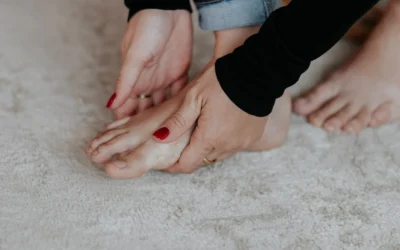
What helps with hallux rigidus, the stiff big toe?
Hallux rigidus is arthritis of the big toe joint (first metatarsophalangeal joint). The cartilage wears away, bone spurs form at the edge of the joint, and the big toe becomes harder to lift. What helps depends on the stage: early on a stiff sole, insoles and physiotherapy, in grades I and II joint-preserving surgery, in grades III and IV a fusion. It is not a bunion (hallux valgus), where the toe is crooked but stays mobile.

How is a cheilectomy done and what does recovery look like?
A cheilectomy is the joint-preserving operation for hallux rigidus: the surgeon removes the bone spurs on the big toe joint (first metatarsophalangeal joint) and the upper third of the metatarsal head so that the toe can be lifted again. It is usually day surgery, you can put weight on the foot early, stitches come out after about two weeks, and the joint is moved from the first day. It is not a fusion: the joint is preserved and stays mobile.

How does bunion surgery (hallux valgus) work, and which procedure is right?
In bunion surgery, the first metatarsal is cut, realigned and fixed with screws, and the capsule and tendons are adjusted. For mild to moderate deformities, chevron, scarf and minimally invasive procedures are the options, for severe ones a fusion at the base of the first metatarsal (Lapidus). The operation takes 30 to 100 minutes, often as day surgery, followed by 4 to 6 weeks in a post-op shoe with weight-bearing. The German guideline of 2024 finds no technique clearly superior.